The crack of the rifle echoed off the rocky terrain, a sharp reminder of the enemy's presence hidden in the rugged folds of the Dargai Heights. Bullets whistled past, a deadly symphony accompanying the rhythmic pulse of boots striking earth. The air was thick with the acrid smell of gunpowder and the metallic tang of blood, the cries of the wounded blending with the wind's whisper through the barren landscape. Above it all, defying the chaos, the eerie wail of the bagpipes rose — a galvanizing, defiant call to arms that would be remembered through the ages.
The Unyielding Heights
The Dargai Ridge, a near-vertical cliff face on the North-West Frontier, was the ultimate test laid before the British forces in October 1897. The ridge had turned away the Dorset and Gordon regiments, bold efforts thwarted by the tenacious Afridi marksmen who lay in wait among the rocks. The Afridis were no strangers to the tumult of conflict; their skill in utilizing the landscape to their advantage was unmatched, their resilience legendary, every skirmish a testament to their fierce independence.
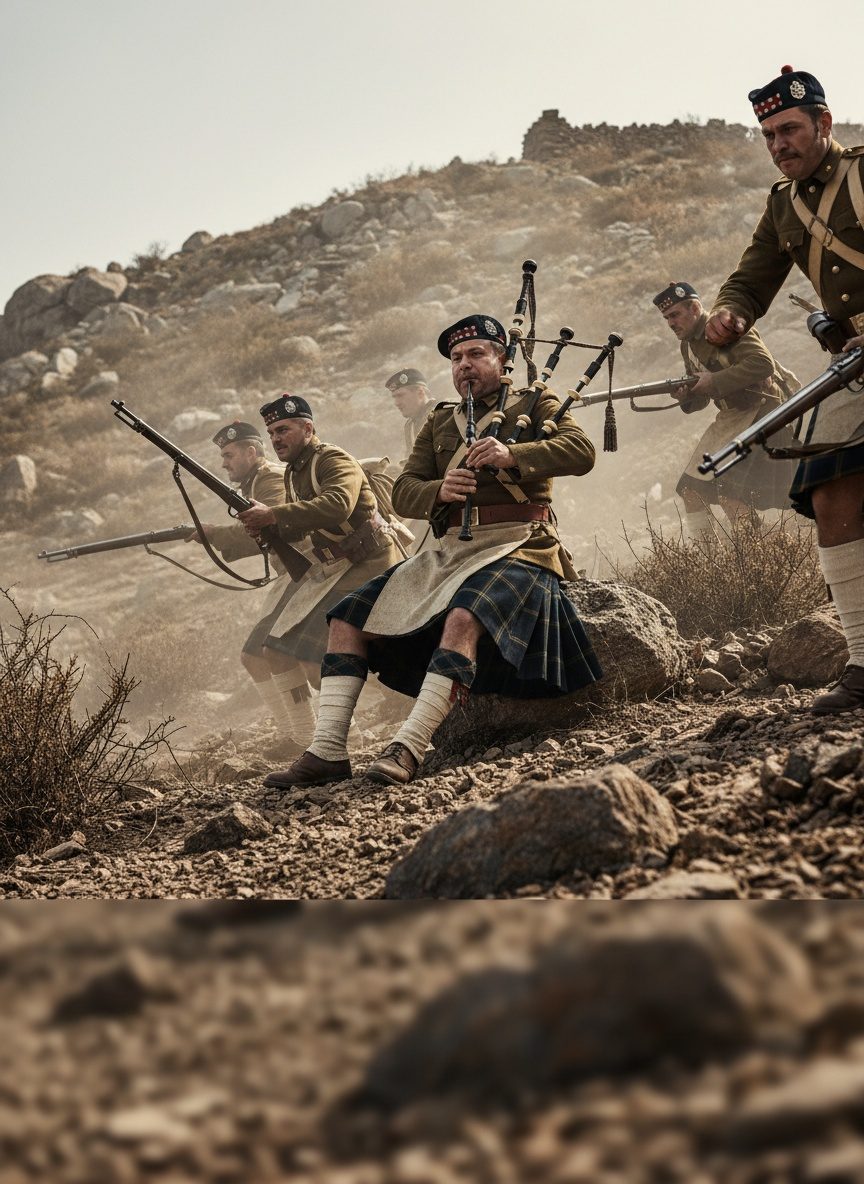
The Black Watch now found themselves at the base of this formidable natural barricade, the orders ringing clear in the air: the ridge must fall. Standing in their distinctive tartans, the men faced the task with stoic determination. Among them, Piper George Findlater, a man whose resolve would soon earn him a place in history, prepared to accompany them into the line of fire. As bayonets were fixed and a hush fell over the regiment, the only sound was the wind scratching against the rocky outcrop, an ominous silence before the storm.
The ascent was sheer madness, a gauntlet of fire and stone. Bullets pummeled the ground, striking men down before they could take their first steps. Yet, as if fueled by some indomitable spirit, the pipes began to play — their piercing notes twisting around the intermittent bursts of gunfire. Piper Findlater was hit, the crack of the enemy's rifle bringing him to the ground, yet his spirit remained unbroken. Propped against a rock, pain an afterthought, he continued to urge his comrades onward with a melody that defied despair.
Piper Findlater's Heroic Stand
In the bloody pandemonium that defined the ascent up Dargai Ridge, Piper Findlater's perseverance emerged as a beacon of tenacity. Each emotive swell of his bagpipes resounded across the battlefield, carrying with it the weight of history and the promise of valor. Despite being shot through both ankles, his determination to uphold his duty did not waver; instead, it transformed into a powerful symbol that rallied the Black Watch as they pushed inexorably upwards.
His act of defiance inspired his comrades, each note a clarion call that reminded them of the honour entwined in their cause. The skirl of the pipes became a unifying force, its sound seemingly imbuing the men with a newfound courage. Against the backdrop of adversarial gunfire and the treacherous terrains underfoot, Findlater's music became the soul of their charge, intertwining individual acts of bravery into a collective surge of resolve.
The Black Watch, galvanised by this symbolic defiance, managed to breach the Afridi stronghold where others had faltered. Through the haze of smoke and cries of the injured, they reached the summit, their victory underscored by the unyielding resonance of Findlater's pipes. His steadfastness, rendered all the more poignant by his severe injuries, captured the quintessence of courage under fire, turning an ordinary engagement into an unforgettable legend.
Why Legends Endure
The charge at Dargai, once the dust had settled and the last echo of battle faded into the twilight, left more than just a strategic victory in its wake. It engraved a vivid tale of unyielding spirit in the annals of military history. The events that unfolded on that ridge transcended the simple tactical narrative of an army overcoming a geographical challenge; they crystallized into a story of resilience, of the power of morale under the most extreme conditions.
Piper Findlater’s story soared beyond heroism into the realm of the mythical, symbolising the grit and tenacity inherent in human resolve. His bagpipe sound became a haunting, uplifting soundtrack to a moment when physical and psychological boundaries were tested on the brutal stage of war. He was awarded the Victoria Cross, an acknowledgment of personal sacrifice that highlighted his pivotal role in a collective triumph.
Understanding the charge at Dargai, and the people who lived it, offers a reflection on the extraordinary endurance of the human spirit under siege. It poses questions about the nature of courage, the power of leadership, and the narratives that endure long after the last soldier leaves the battlefield. In remembering it, we explore how individuals shape the sweep of history, their stories emerging not just as tales of the past but as lasting inspirations for the future — reminders that in our hardest moments, it is often the music we create that guides us to victory.