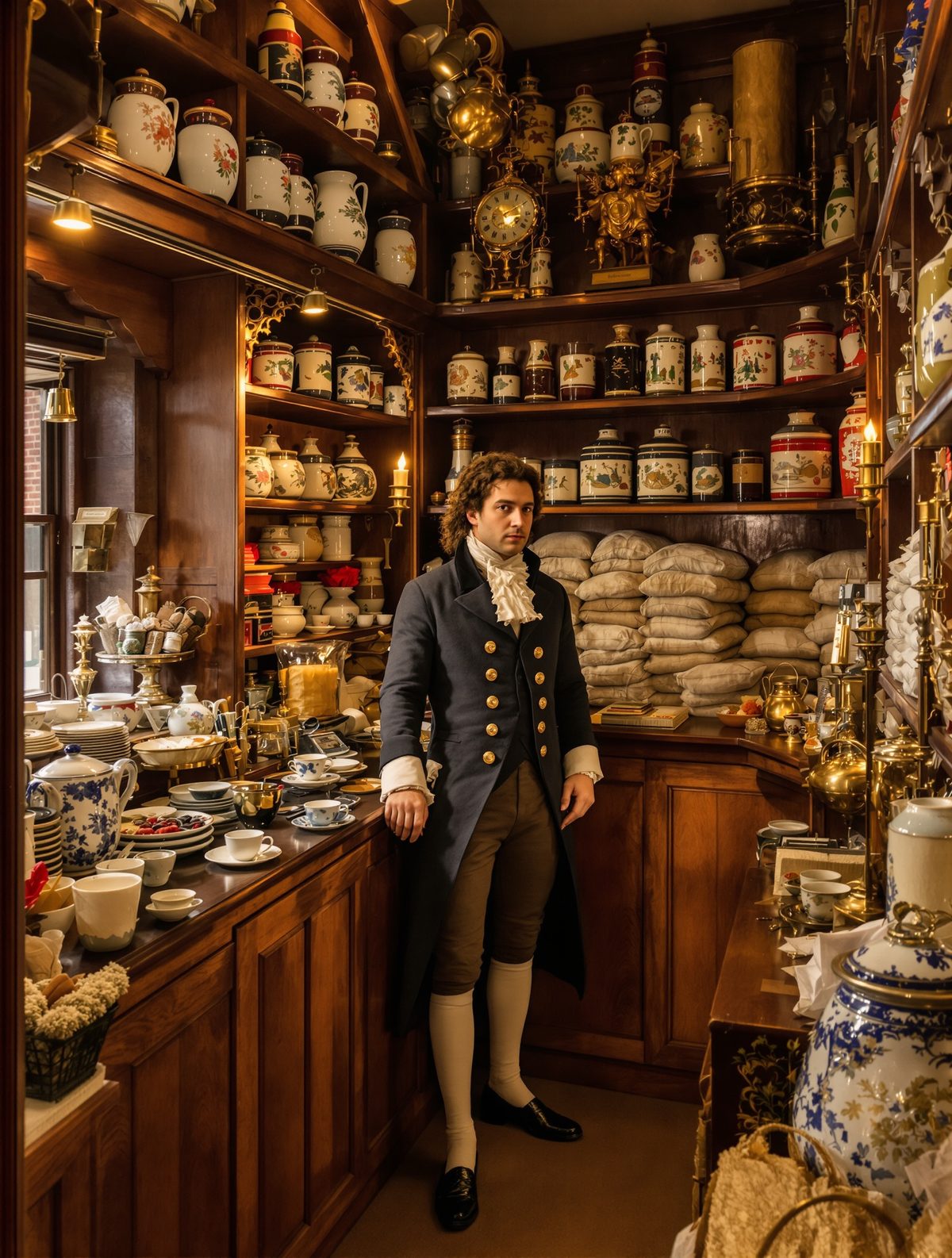
In the bustling heart of Georgian London, amidst the cobblestone streets and clattering carriages, stood a quiet shop that would challenge the very fabric of social and commercial norms. Picture this: the year is 1717, and you find yourself drawn to a narrow entrance on Devereux Court just off the Strand. Above it swings a sign bearing a golden lion, glittering in the rare burst of English sunshine. You step inside, leaving behind the boisterous din of coffeehouses that have dominated the London social scene. This is no ordinary shop; it is a bold venture inspired by a man's vision and whispers of change in the very nature of British society.
A New Brew in Town
The opening of Thomas Twining's tea shop was nothing short of revolutionary. At a time when coffeehouses were thriving, serving as hotbeds of political discourse and male camaraderie, Thomas Twining, a silk weaver's son, decided to defy convention. His tiny establishment offered something quite different: a fragrant, delicate brew that had arrived in the West from the enigmatic shores of China and India.
Tea, a luxurious novelty once reserved for royalty and the upper echelons of society, found its worthy steward in Twining. His mission was simple yet audacious — to make tea accessible, especially to those whom the boisterous coffeehouses excluded: women. In an era when women of genteel birth were barred from public houses, Twining offered them a sanctuary. His shop was the first to sell tea to be taken home, a concept as fresh and inviting as the teas he served. By 1784, Twinings was so ingrained in British culture that sales reached more than five hundred pounds of tea a week.
The Twining Legacy: Beyond Just Business
Born in 1675 to a family of modest means in Gloucestershire, Thomas Twining arrived in London with ambition in his heart and skill in his hands. As was common in those days, Twining began as an apprentice, learning the ropes of commerce and trade through practical experience. Eventually, he found work with a prominent coffeehouse merchant, which sparked the inspiration for his singular enterprise.
Twinning's shop was not merely a merchant's endeavor. It became an emblem of social progress. Among its early patrons were women of distinction, such as the Duchess of Bedford and Sarah Sophia Banks, sister to the renowned botanist Joseph Banks. Twining provided more than tea; he offered an environment conducive to the exchange of ideas — a quiet rebellion against societal norms.
The Lion, the Queen, and an Empire’s Thirst
The emblem of Twining's shop, the Golden Lion, became synonymous with quality and refinement. However, tea's rise in popularity was not solely due to taste. In 1724, Thomas secured a deal with the royal family, stamping royal approval on his stock by providing his blends to Queen Caroline. Twining’s reputation was further cemented when he penned an open letter advocating for tea, swaying public opinion towards the leafy indulgence.
Yet, Twining’s success wasn’t without challenges. Rival merchants and the skepticism towards any 'foreign' sort of drink added hurdles. But the tide was turning. By the late 18th century, British society was rapidly consuming more tea than coffee, a shift marked poignantly by a staggering drop from 60% to 10% in coffee imports while tea took its place and surpassed with grace.
The Craft of Taste: Stirrings of a Cultural Movement
As Twinings became synonymous with superior tea, a curious transformation took place across the British Isles. Tea emerged not just as a drink but a cultural icon interwoven into the British way of life. Homes adopted daily rituals of tea brewing, a practice that fostered connection and conversation, embracing the warmth of shared moments.
By mid-18th century, tea gardens sprung across London’s outskirts, and congregational tea parties became the vogue, signaling the emergence of a charming pastime that crossed class boundaries. In more public spaces from meeting houses to salons, tea was cherished, connecting hearts over china cups and quiet steam.
A Legacy Steeped in Tradition
Thomas Twining’s remarkable venture has stood the test of time, its doors remaining open for over 300 years. Unlike the transient coffeehouses of his era, Twinings tea shop still draws patrons to 216 Strand, a testament to its enduring appeal. Generations of the Twining family have carried forth the vision, extending the reach of their teas far beyond London to an appreciable empire.
Today, the clear melody of porcelain and gentle chimes of teaspoons grace tables around the world, where tea remains an invitation for reflective pause. The same spirit that inspired Thomas Twining continues to infuse life into what once was a daring dream, one sip at a time.
Why does this matter today? The story of Twinings is more than a tale of business ingenuity; it's a narrative of challenging social structures and evolving tastes. In an era characterized by gender divides, Twining saw beyond convention, envisioning a future where community and culture brewed together in harmony. For the modern reader, it’s a reminder of the power a single act of innovation can have — changing not just industries, but cultural landscapes as well.